






Whole life carbon
Whole life, building life cycle or full building carbon assessments consider the combined impacts of both operational and embodied carbon emissions over a building's ent9ire lifecycle, including repair and replacement cycles. Carbon in this case usually refers to carbon dioxide equivalent (CO2e) which is a metric measure used to compare the emissions from various greenhouse gases on the basis of their global-warming potential (GWP), by converting amounts of other gases to the equivalent amount of carbon dioxide ( often shortened to just carbon) with the same global warming potential.
Operational emissions from the use of a building or asset are divided into direct emissions, such as a wood burning stove or gas cooker, called Scope 1 emissions and indirect emissions, from for example electricity used in the dwelling but produced via a coal fired power station, which are called Scope 2 emissions. Embodied or Scope 3 emissions are effectively all other emissions that might relate to the construction of a building, the carbon emissions resulting from the materials, construction and the use of a building over its entire life, including its demolition, disposal or re-use.
A Whole Life Cycle Carbon assessment provides a true picture of a building's carbon impact on the environment and studies will normally divide the whole life assessment into system boundaries from cradle to cradle according to the standard BS EN 15978-1 Sustainability of construction works - Methodology for the assessment of performance of buildings. - Part 1: Environmental Performance. This standard looks at a number of different impact categories across a building life cycle, how ever the same principles are used when the only impact category being studied is carbon equivalent emissions.
Studies have shown that when a building is assessed over a full life cycle of 60 years the carbon emissions that are associated with all processes up to its final completion can be up to 50% of the buildings associated carbon emissions.
There are a number of key documents that are freely available and help explain what whole life carbon is, why it is important and how to calculate it for a building design, some of these are given below.
- The Royal Institution of Chartered Surveyors Whole life carbon assessment for the built environment - RICS V2
- The Royal Institution of British Architects Embodied and whole life carbon assessment for architects
- The Association of Sustainable Buildings Products Whole life carbon measurement: implementation in the built environment
- Low Energy Transformation Initiative https://www.leti.uk/carbonalignment
- The Institution of Structural Engineers https://www.istructe.org/IStructE/media/Public/TSE-Archive/2020/A-brief-guide-to-calculating-embodied-carbon.pdf
NB PAS 2080:2023 Carbon management in buildings and infrastructure, second edition, published by The British Standards Institution in March 2023, defines whole life carbon as the: ‘sum of greenhouse gas emissions and removals from all work stages of a project and/or programme of works within the specified boundaries…. NOTE 1 This includes GHG emissions and removals within the project/programme boundary, as well as emissions/removals between the project/programme and study boundary. NOTE 2 Not to be confused with “design life”, which is the life expectancy of the material/product/asset, as defined by its designers within its specified parameters. Typically, whole life is longer than design life. NOTE 3 Whole life carbon considerations for a project and programme of works are wider than the typical life cycle assessments account for, particularly when considering carbon emissions/removals in their influence at a system level.’
--editor
[edit] Related articles on Designing Buildings
Featured articles
Check out some of the best features and news from Designing Buildings as well as key stories from around the web.

New guidance for professional practice, cultural change and regulation in social housing.

The heritage of nuclear and conventional power stations.
New measures to stop people being ripped off

Government to protect families from cowboy builders and aggressive bailiffs.

New Futurebuild showcase brings an innovation-first approach.
National Planning Policy Framework
Understanding the 2026 changes.
ECA's public affairs priorities

Member consultation opens to shape priorities for 2027 to 2030.

Dutyholder responsibilities from 1 July 2026.
Where performance meets practice

The Building Envelope Stage at UKCW Birmingham.
CIAT publishes briefing on planning reforms.
Leaders in Learning for Practice Network

Call for conservation leaders in learning to register interest in new network.
The importance of early engagement

Construction lessons from the Trillium HealthWorks Experience Centre.
Mayors are to be given planning call in powers
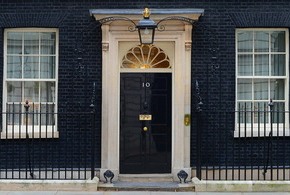
Mayors across England will be able to make the most important planning decisions.